Bridge Strike Avoidance and Traffic Commissioner Responses
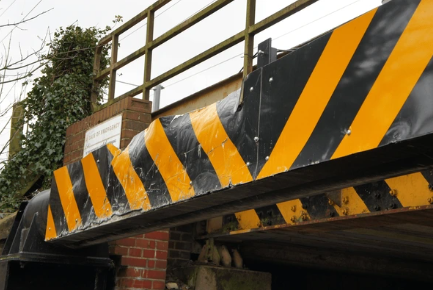
Traffic Commissioners take bridge strikes seriously and are under regular and heavy pressure from government, rail companies, Rail Track, and other interested parties, to reduce the high number of strikes, not least because, apart from the obvious road, vehicle and passenger safety consequences, of the potential for huge inconvenience to rail users following a strike. Bridges are often fragile, and any major impact risks damage to bridge infrastructure, can damage rail alignment with potential derailment issues, and may require expensive repairs. There is also the potential for widespread passenger disruption whilst bridges and rails are checked and, if necessary, repaired at often great expense – often millions!
But bridge strikes are entirely preventable yet remain one of the highest risks to road safety and network efficiency, in numbers well ahead of other infrastructure collisions. For vocational vehicle drivers and operators, a collision with a bridge carries severe consequences, inevitably leading to a Traffic Commissioner Driver Conduct Hearing and, not unusually, a Public Inquiry for the Operator Licence holder.
So here is what you need to know to avoid a bridge strike and protect your professional driving license.
Prevention: Bridge Strike Avoidance
The most effective way to handle a bridge strike is to prevent it from happening in the first place through careful and detailed planning.
- Know Your Vehicle Height: Never guess. Measure the exact height of your vehicle and trailer before every journey. This includes checking the height after loading, swapping trailers, or changing tyre pressures. Make sure your Operator provides a Measuring Stick, and marks to trailer or box height clearly on the headboard, best in black on a white background. Don’t forget to calculate-in your 5th-wheel height and tyre sizes.
- Set Your In-Cab Gauge: Ensure the in-cab height indicator matches your actual traveling height. Check it can be seen from the driver’s seat without obstruction – I saw one kept in a box! Record pre-journey checks and the vehicle height on your DDR – most modern paper DDR’s and telephone Apps allow for this. Use the Measuring Stick if provided – if not make a note that none was provided.
- Use HGV-Specific Satellite-Navigation: Commercial vehicles must use specialised HGV navigation systems. Standard car GPS units (and most mobile telephone apps) do not account for low bridges, weight restrictions, or narrow lanes.
- Observe Road Signs: Constantly scan for low-bridge warning signs. Remember that circular signs show mandatory limits, while text-based signs warn of upcoming restrictions. But not all bridges are clearly marked in advance – the rail bridge over Grosvenor Road London and going into Victoria has no clear warning signs on the east-bound carriageway.
- Plan the Route: Avoid relying solely on technology. Pre-plan routes using official maps and resources, especially when diverted or driving in unfamiliar areas. The RHA Truckers Atlas of Britain shows bridge heights, as do the AA Truckers Atlas and the Philips Atlas, and many other specialist map publishers.
The Consequences: Driver Conduct Hearings
When a bridge strike occurs, the police and Network Rail report the incident to the Office of the Traffic Commissioner. Drivers are routinely called to a Driver Conduct Hearing to explain their actions even though it will not always be their fault – faulty route planning by the Planner, incorrect height markings on trailers, and I have even heard of one bus company which suppresses their Sat-Nav bridge height alarms on regular routes.
Traffic Commissioners treat strikes as a failure of professional standards both for drivers and Operators.
- The Presumption is Revocation: The starting point for any professional driver who strikes a bridge is typically the revocation of their vocational (LGV/PCV) license and a 6-months disqualification period.
- Assessment of Blame: The Commissioner will examine whether the driver performed proper pre-checks, ignored road signs, or used an inappropriate navigation system.
- Mitigating Factors: Drivers must be able to show what steps they took to prevent the incident. Honest errors during unexpected road diversions may be viewed differently to blatant negligence, but the threshold is high.
- Impact on the Operator: The transport manager and the operator may also face a Public Inquiry. Failure to properly train drivers or to record vehicle heights can result in the suspension or loss of the Operators’ license.
If you get caught-up in a bridge strike, call us – we have a specialist team of Road Transport lawyers who can help with Driver Conduct Hearings and Public Inquiries, often obtaining results much lower than those starting points set out in the Senior Traffic Commissioners Statutory Guidance.